


How much cash flow are you losing to billing delays?
Billing delays are not the kind of thing that will show up explicitly in your cashflow forecast... But Tabs’ calculator will tell you in 60 seconds.

👉🏼 Tough situation got you spinning in circles? Send me your questions, and you might just see yourself in next week’s Mailbag. Submit anonymously using the button below:
Here’s what’s on the menu today:
Why AI spend is a 1% problem (and how to meter it)
Dealing with Powerpointmaxxers
Leaving an accounting firm for an operating role at partner level
Now, let’s get into it.

Tech CFO from New York, NY, USA
As a CFO, what's the best framework for evaluating tech spend? What analyses should I use, and which software tools can help?
I realize this is a broad question, but with personnel, cloud, AI, and other costs mushrooming, it feels increasingly urgent for CFOs. IT spend also seems to be a real blind spot.

Hey Tech CFO,
I agree with you. This feels like a capability gap for finance at large that is being exposed in real time.
I grew up in a world where 90% of the IT budget was built on fixed contracts, so budgeting was pretty easy. Then came SaaS, where cost was increasingly driven by user numbers, which meant building a more direct relationship between headcount assumptions and IT costs.
Then cloud came along, and we had to think harder about consumption. Especially for technology businesses where cloud usage forms part of COGS, and therefore unit economics and pricing.
But none of that could have prepared us for what we are seeing now.
Eighteen months ago, the world had you believing that all you needed was a $20, or maybe $200, Pro account and you could remove headcount at will.
Well, that ain't quite how it turned out. Turns out that building a better-looking dashboard in five minutes is cute, but it doesn't necessarily create any real economic value.
The serious savings are going to come from the hard grind of redesigning workflows to deliver much more for less. And that's slow, methodical work (I hate to be THAT guy, but I've been saying this for a couple of years now).
And doing that is going to burn some serious tokens. As compute demand grows, (and AI is just the most obvious example) more technology spending is going to shift toward consumption-based pricing. Which makes it much harder for finance to forecast, analyze, and ultimately control.
Pareto's Law tells us that 80% of the value will come from 20% of the activity. But Secret CFO's Law says AI will be more like 99% of the value coming from 1% of the usage.
The problem is, we don't yet know which 1%.
Some employees may end up spending extraordinary amounts on AI, and some of that spending will be valuable. If you can turn a 10x engineer into a 100x engineer for twice the cost of their salary, why on earth wouldn't you?
Which is why I am wary of blanket spending restrictions.
Take Accenture's recent decision to centrally fund $29 of monthly Claude consumption per employee. Surely a policy like that incurs the wasted spend on the 99% and risks constraining the 1% that is valuable.
So what should CFOs actually be doing?
Here are the things I would focus on:
Get your accounting house in order first: People, software, cloud, AI, infrastructure, external developers. Separate fixed commitments, per-seat costs, consumption, and project investments. Make sure you have a GL and cost center structure that is fit for purpose to capture the reported actuals.
Build forecasts around cost drivers: SaaS should link to seats and utilization. Cloud to workloads, consumption, and unit costs. AI to models, tokens, agents, and tasks. Technology headcount should be connected to development capacity and delivery plans. You’ll be wrong, but it’s a start to better understanding it.
Attack the obvious SaaS waste: Look at purchased versus active licenses, duplicated functionality, premium seats that aren't being used, and contract renewal cliffs. This is relatively straightforward work. Good old fashioned cost butchering.
Build proper compute unit economics: Ask what it costs to serve a customer, process a transaction, or deliver a product feature. Is that cost improving as the business scales?
Put a meter on AI: You need to track consumption by employee, team, model, agent, and workflow. But crucially, connect that to output. There is a whole category of tooling growing rapidly. I know CloudZero and Ramp both already have products here.
Optimize consumption intelligently: It feels like model ‘routing’ is the future, again, I expect this will be just another tool to buy in the short term, but we need something to make sure the intern isn’t using GPT-6 Astra to design a conference meeting lunch menu
Mind your language: Start putting pressure on demonstrated benefits. Be pretty tight on language that rewards hey ‘I saved an hour here’ or whatever. Make sure the business understands that it’s not a saving unless you can point to it on the P&L. And if it’s not a P&L saving, it means that efficiency has been ‘reinvested’. Which might be fine, but … where? What did we get back?
Feed the winners: Where you do see real momentum in redesigning workflows and efficiency, make sure you don’t starve it, give it the capital it needs to breakthrough and set an example.
Ultimately, I think this is going to require finance to develop a much deeper understanding of technology economics than we have historically needed. It’s frankly a muscle we CFOs don’t have today; our people, processes and systems aren’t built to deal with this issue.
We are working it out in real time.
Note - I did write a piece on this six months ago. It might still be helpful for some things, but frankly, it already feels like a lifetime ago!
TLDR: There is no silver bullet here. It starts with good accounting and understanding, and better cost modeling.

K0006825 from London, UK
As a newly appointed Head of Reporting and Performance for a business unit within a large FTSE company, I'm now being invited to far more senior meetings and, frankly, the more I learn, the less I want to know!
Joking aside, our ExCo has four qualified accountants on it, which creates plenty of healthy debate. The challenge is that they rarely seem to agree on anything, discussions quickly become bogged down in detail, and there is an almost constant demand for PowerPoint presentations.
For example, I recently prepared a 40-slide deck at their request, yet the meeting never progressed beyond slide two.
How can I help shift the conversation away from PowerPoint and towards the strategic issues that ExCo should be focusing on?
What techniques have others used to keep senior leadership teams focused on decisions and outcomes rather than detail and presentation packs??

Hey, thanks for the question.
Frankly, I’m not sure four qualified accountants on the ExCo is promoting healthy debate. If nothing is getting decided and all that happens is a demand for more PowerPoint decks, that is the opposite of healthy debate.
It sounds more like bureaucratic hell.
I've been in rooms with too many finance people before. It's dangerous because the wrong things can end up dominating the conversation. Most business problems are ultimately solved through better products, better marketing, and better sales. Finance is a vehicle to help make that happen, not an end in itself.
I feel for you here, because I'm not sure how easy this will be for you to change. This sounds like an issue with the culture and leadership of the ExCo itself, which you're not really in a position to fix.
I guess it depends how brave you want to be.
My style is that I couldn't put up with something like that for long. I'd be prepared to be quite direct. After a few months of this nonsense, I'd be tempted to show them how many hours the finance team had spent preparing presentations over the previous quarter, alongside the business performance issues that actually needed attention. Sales down X%, margin eroded by Y%, opportunities missed.
Then ask them how they'd prefer me to spend my time.
But that's definitely not the diplomatic route. And probably not the one I'd recommend to someone newly appointed to their role…
So let's explore the more sensible option.
I'm going to assume you report to a CFO who is one of the four accountants on the ExCo.
That's the person you need to influence. Outside the room.
Have a candid conversation about whether the current meeting cadence is actually achieving what it's supposed to. Ask for their advice on breaking the cycle, and what they need from you to help make that happen.
One suggestion I'd make is to change the starting point for every agenda item. Instead of starting with a presentation, start with the decision the ExCo needs to make. Put the supporting analysis in a short pre-read, with the detail in appendices for those who need it.
But whatever the solution, it needs someone inside that room to drive it. And ideally your CFO can be that person.
Because I suspect the problem isn't really the PowerPoint deck, that's just the symptom. The problem is an ExCo that hasn't worked out how to use its collective time to make decisions.
And no amount of prettier slides is going to fix that.
But honestly, dude, that sounds grim. If I couldn't influence a change in something like this over time, I'd probably start looking for somewhere more rewarding to work.
TLDR: Get your CFO onside to help fix the decision-making culture that creates the Powerpoint hell.

A Rolling Stone from Dallas, TX, USA
I’m 15 years into my career and an equity partner in a 40-person accounting firm, but I’m looking for my next chapter and want to get outside public accounting. My background includes Big Four audit, building finance/accounting at a startup that later IPO’d, and helping grow my current firm from 3 people to 40 while advising lower-middle-market owners on tax, accounting, finance, operations, growth, and strategy.
I still enjoy solving problems, working with owners, developing people, and helping companies grow. But I’m tired of the fragmentation of public accounting: managing many separate client relationships and constant client-service demands.
I’d like to move into an operating role where I can go deep with one company or investment platform and use the full range of my experience. Given that a major compensation reset isn’t practical, which paths would you target—lower-middle-market CFO, PE-backed portfolio company, family office, investment platform, CFO/COO hybrid, or something else?
How would you pursue those options discreetly without broadly signaling to your local network that you’re looking to leave?

Hmm. This is an interesting question. And not an easy move to pull off.
So, I think there is a bit of a reality check here.
You have fabulous public accounting experience, some earlier experience inside finance functions, and you've built a successful business of your own. That last part is particularly valuable.
But I wouldn't assume there will be a line of businesses waiting to hire someone with your profile at anything close to your current compensation in a finance leadership role.
You'll be competing against CFOs who have already delivered in operating roles, often in exactly the kind of businesses you're targeting. And while your experience is valuable, it isn't a direct substitute for that.
So I suspect your best route is through your existing credibility and network. Probably with lower-middle-market, founder-led businesses that need a broad CFO who can help professionalize and scale the company.
And that probably means clients, which creates a problem for your desire to be discreet! Not to mention potential independence issues.
But I think the bigger question is financial.
You've spent years building an equity interest in a business. Before worrying too much about your next job, I'd work out how to realize some of that value.
Depending on the partnership dynamics, perhaps your fellow partners could buy you out, or you could promote someone internally and structure a buyout with a sellers’ note.
If you can create a meaningful liquidity event, you may be able to take the pressure off your immediate compensation requirements and reposition yourself for an operating role. Perhaps even accept lower cash compensation for equity upside.
I would explore all this before making any irreversible decisions. Understand your partnership valuation, exit terms, and restrictive covenants. And by all means quietly test the market with a couple of trusted CFO recruiters.
And don't overlook a third option: hiring someone to run more of the client-service machine while you focus on building the business or investing. You might be able to create the change you want without leaving the asset you've built. Maybe using your firm as a buy and build platform will give you the building and operating experience you crave.
Vertical experience is real leverage, and yours is in accounting / professional services, think how you can use it.
But ultimately, I think you need to recognize that you are trying to change careers, preserve your compensation, retain discretion, and avoid sacrificing the value you've accumulated.
That's a lot of constraints, so something probably has to give.
TLDR: You've built a valuable business, but don't assume that translates into an equivalent CFO job. Solve the economics of your exit first.


A few of the biggest stories that CFOs should pay attention to. This is also the section you might not want to see your name in.
Talk about inheriting a shitshow. The new CFO has his hands full clearing up the accounting, governance, and legal issues facing the AI server maker.
Automattic’s interim CFO quit when the board started interviewing his replacement
I've seen some messy corporate politics in my time, but this is starting to look like an episode of Succession if it were written by Larry David (and then published on a Wordpress website.)
Book Lists?
People always ask me for recommended book lists, I’m thinking of publishing one to accompany each playbook each month, like this:

Is this helpful? Hit reply with a quick yes or no.

ICYMI, here are some of my favorite finance/business social media posts from this week.
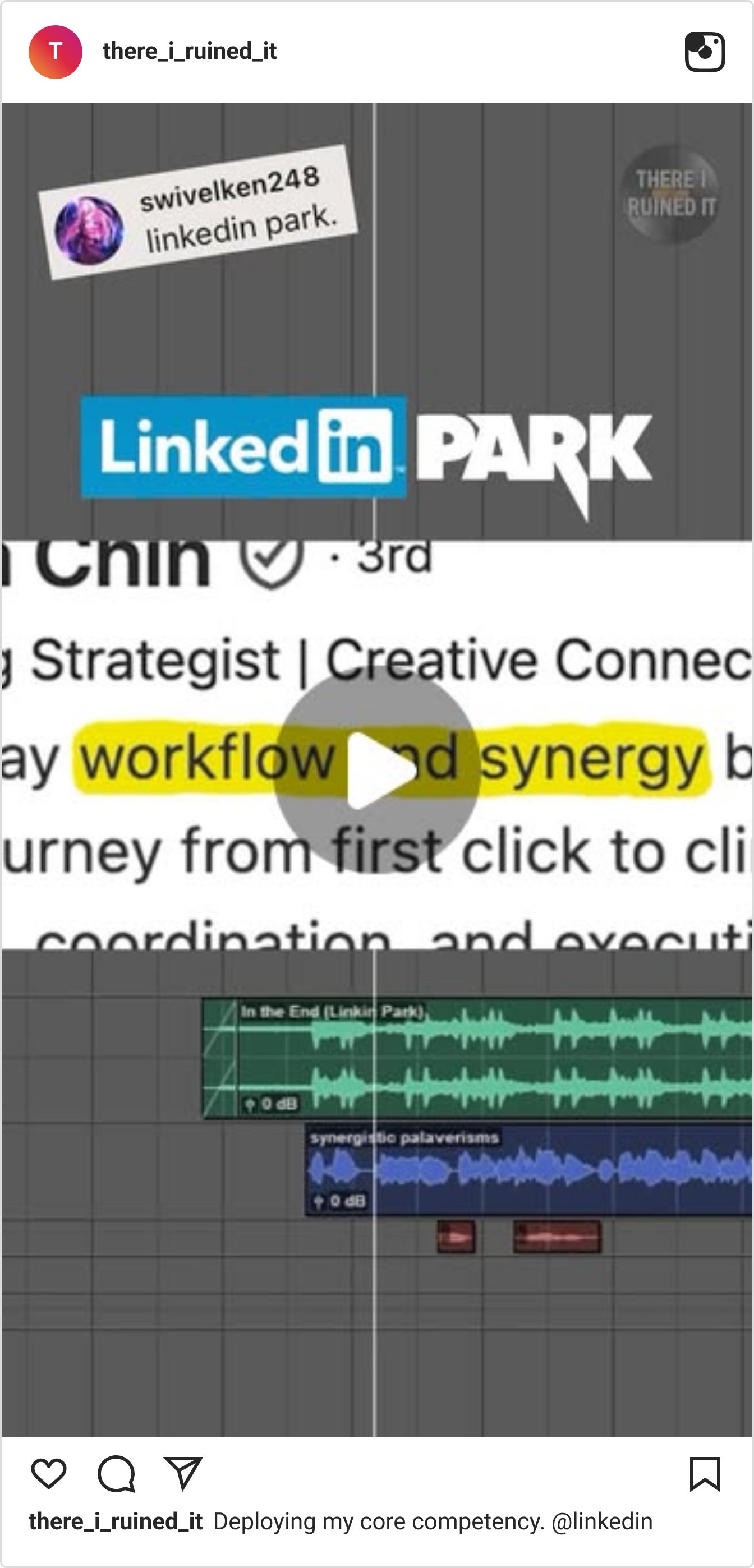
I spend all week writing crispy finance content for you, and THIS goes viral. THIS is what you want!?
Well this is that ruined then…

If you’re looking to sponsor CFO Secrets Newsletter, fill out this form, and we’ll be in touch.
If you enjoyed today’s content, don’t forget to subscribe.
You can help make sure this newsletter always stays free simply by spreading the word. And when you share CFO Secrets with your finance friends, you’ll earn rewards, including a 50-page PDF guide on what it takes to be a great CFO. Start sharing your unique referral code today: {{rp_refer_url}}
Last weekend’s Playbook was part three of our CFO Operating System series, where I get into the meat of how to set up your routine and build out your operating system and get a good rhythm going.
Annnnnnd… one more thing.
If you made it this far, then you’ll be the first to know about something yuuuuge coming next month… click below to save your spot:


Disclaimer: I am not your accountant, tax advisor, lawyer, CFO, director, or friend. Well, maybe I’m your friend, but I am not any of those other things. Everything I publish represents my opinions only, not advice. Running the finances for a company is serious business, and you should take the proper advice you need
