


If AI is reshaping every part of the business…why is finance still stuck cleaning CSVs?
Manual, error-prone tasks are holding your team back. Q1 is the moment to break that cycle.
Aleph is the first AI-native FP&A platform that can be live in hours. It connects all of your cross-system data and spreadsheets to auditable AI, automating reporting and analysis that previously took days.

Send me your stickiest CFO dilemmas (anonymously if you wish), and I might answer them in the Mailbag.
👉 Send me your questions by filling out this form.
Now, on to today’s Mailbag.
We’ve got some great topics. Here’s what’s on tap:
Influencing AI spend
Centralizing finance operations
Delivering on the day job
Now, let’s get into it.

Jatin from India asked:
I work in the CEO's Office at a mid-sized institutional backed firm. How do I have the discussion with my CFO/persuade him about the budget/capital allocation for (enterprise) AI tools? Both for experimental tools and doubling down if the experiments go well.

Thanks for the question, Jatin. This comes up a lot right now.
There’s a huge spread in how organizations are approaching AI. Some are all-in, some are dabbling, and most are barely thinking about it at all. Despite the noise online, we are still very early in AI’s real impact on businesses.
If you’re reading content like this, you’re already skewed toward the frontier. That’s not a bad thing, but it does mean you’re probably feeling more urgency than the average. Add in AI hype cycles and “everyone is falling behind” content, and it can feel like you are off the pace…
In reality, you aren’t... yet.
Most people need a personal “lightbulb moment” with AI before they really engage. For me, it was building a simple custom GPT to help one of my kids with a learning challenge, and seeing the impact it had.
Until your CFO has a moment like that, they are going to remain skeptical. Enterprise-scale conversations will feel abstract and risky.
So my advice is: don’t start big.
It doesn’t sound like your organization is culturally or operationally ready for enterprise AI tools yet. Instead, run small, cheap, low-risk experiments that produce visible value. One or two seats of a tool, applied to a very specific problem, is often well within discretionary spend and doesn’t need a big capital allocation conversation.
Pick use cases that are:
Low data sensitivity
Easy to validate
Clearly time-saving or quality-improving
Once something works, you have proof. That’s when the conversation naturally shifts from “why are we spending money on this?” to “how do we scale this responsibly?”
TLDR: Think smaller. Get some low risk wins. Showcase them, and get ready to double down when the exec catch up.


Shepherd’s Bush CFO from UK asked:
I am the newly appointed CFO of a PE-backed retail company with several hundred million in revenues, operating across multiple business units of materially different sizes and with a footprint in both the US and Europe.
The finance function is currently highly decentralized. While this structure is appreciated by the BU CEOs, it has not delivered effectively on its core responsibilities. Given the company’s scale and the execution intensity typically required by private equity ownership, I have a strong bias toward greater centralization. But I am pushed to compromise by the CEO who is concerned about the reaction of the BU CEOs and CFOs.
In this context, how would you define the optimal finance operating model for each BU?
Thanks for the question, Shepherd’s Bush CFO.
The answer really hinges on what you mean by a “BU”. Retail businesses, by definition, are made up of a high volume of small operating units. That alone means some degree of centralization is inevitable. The real question is not whether you centralize, but at what level and for which activities.
While several hundred million in revenue is meaningful, it is not especially large in retail terms. So the idea of fully autonomous BU CEOs and CFOs running tens of millions of revenue each should already raise an eyebrow.
Retail operating success is built on brilliant local execution of standardized, centrally defined processes. That naturally points toward a centralized finance model.
My starting position would be this: the core accounting and financial cycles should be standardized. Cashing up and cash management, inventory controls and accounting, procure-to-pay, payroll, reporting, controls, and systems. They should sit under a single finance operating model.
This is even more true in a PE-backed environment, where execution intensity and consistency matter more than local autonomy.
International operations may justify some nuance depending on local regulatory complexity, scale, and maturity. But nuance is not the same thing as decentralization.
If this is a PE platform, then driving standardization is almost certainly part of the value creation plan. A single ERP, consistent data, common processes, and clear accountability materially increase exit optionality and valuation. Your eventual buyer universe can look very different for a business that sits on a single coherent platform versus one that is still fragmented.
A fully platformed business is far more attractive to strategic buyers. A business that still requires significant operational heavy lifting to standardize is much more likely to appeal primarily to secondary PE buyers. This will all end up affecting value…
The political constraint you describe is real. As long as the CEO is prioritizing BU leader comfort, change will be slow. So rather than framing this as a finance org design debate, work backward from the exit. Show how decentralization directly threatens the ability to present the business as a coherent, scalable platform. If that’s half a turn of EBITDA upon exit, quantify that, make it real for the CEO.
Practically, the lowest-friction place to start is accounting and reporting. Centralize those first. Leave FP&A and business partnering closer to the BUs for now. Over time, as the centralized engine proves faster and better, those BU finance roles will naturally evolve into true commercial partners rather than mini-CFOs.
During my time in retail businesses, I’ve seen whole parts of retail operations (‘business units’) measuring hundreds of stores, and billions of revenue, yet only having 2 or 3 dedicated finance heads. Everything else was aggressively centralized.
You might even use one of your BU CFOs who knows the business to lead the standardization project - it will help the BU’s feel like they’ve got an ‘inside man/woman’ - as long as you are confident you can control their agenda.
That sequencing often lets you win the war without fighting every battle at once, and also reduces the risk of destabilizing the business during the change.
TLDR: You are right to push the centralization agenda in a retail business of this scale. Get the CEO on board by showing the value leakage at risk if a single platform isn’t delivered. Then start by getting the back office standardized. Eventually, those ‘CFO’ roles will be glorified business partnering roles.

Rosey from USA asked:
I work as a business level finance lead/Director in a publicly traded manufacturing company. I’ve been delivering on stretch assignments over the past 3 years, but it exposed some cracks in my department.
I led a (relatively) successful corporate-wide close and consolidation software implementation which is live now and ~1 year in. Software plus value stream mapping cut close by a day and a half.
I have had audit escapes in which external audit recently found inadequate controls in my business and in other businesses outside my purview two years in a row. Both escapes had no financial impact. We also had significant volume misses, and this year our business missed Plan across all KPIs.
However, feedback up the ladder continues to be favorable. I am now being offered an opportunity to lead a post-merger integration, assuming we close the deal.
Any recommendations or tools for both how to assess the mixed performance, maintain the trust I have built, and what to consider in future stretch assignments?
Rosey, forgive me for being direct, but I think it’s important.
Reading this, it sounds like you are unintentionally exposing yourself.
You’ve clearly been identified as a capable operator. You’re being trusted with high-impact stretch assignments: systems transformation, major capital allocation work, M&A integration. That doesn’t happen by accident. Someone up the chain believes in you.
But business performance still matters more than projects. And if you have missed your plan across all KPIs, that is not a good look, regardless how good a job you have done on your project work.
Add in repeated audit issues (even if immaterial), and operational misses that were identified late. Taken together, that creates a risk narrative, even if individual issues feel explainable in isolation.
In short, it all sounds like a business out of control to me. Your first, second, and third job has to be to get it back under control. Or you have to hand the reins to someone who will.
Projects are not an end in themselves. They only matter if they translate into better execution, stronger controls, and improved financial outcomes in the core business. When the stretch work is going well but the day job degrades, it creates ambiguity about where your real impact is landing.
The uncomfortable truth is this: it sounds like the organization is setting you up to fail. You are being given transformation and “special forces” work without meaningful relief in your core role. That is flattering, but dangerous. Over time, something has to give. Right now, it appears to be your base of operations.
That said, this is not just a structural problem. It’s also a leadership one.
At your level, resilience means being explicit about trade-offs. You can do almost anything, but you cannot do everything. If you keep absorbing stretch assignments without forcing a resourcing conversation up the chain, the system will happily let you carry the risk.
I’ve seen this pattern many times. It usually ends one of three ways:
The person burns out.
Their credibility erodes because the basics slip.
Or they get labeled as “great on projects, shaky on operations,” which is a hard box to get out of.
None of those outcomes are great for you. You should force a fork in the road.
Either:
You step out of the day job to formally lead transformation or integration work, with your operational role backfilled, or
You get incremental capacity and senior support underneath you, so both the transformation work and the day job can succeed.
Anything else is just wishful thinking.
For future stretch assignments, the filter should be simple:
“What has to come off my plate, or who has to be added, for this to succeed without degrading core performance?”
If that question can’t be answered clearly, the right move might be to say no, or at least “not like this.”
TLDR - Be careful here. It’s not ok for the day job to slip, even if the projects are a success. You need to be clearer with your seniors about the implicit trade-offs with project works and resources you need to be successful.


A few of the biggest stories that every CFO is paying close attention to. This is the section you might not want to see your name in.
Guess what? Doing the foundational work helps build a… foundation of knowledge and experience. And, BTW, CFOs can’t think deep, heavy thoughts every second of the day.
AI is going to change how we have to train our brains to think… we live in crazy times.
After so much legal wrangling, the Feds just kind of shrugged and said, “our bad, you cool.” The mining giant’s former CEO settled fraud charges in the same case in 2023.
Matt Skaruppa helped the online language learning platform go public. Board insider Gillian Munson is taking the reins next month.

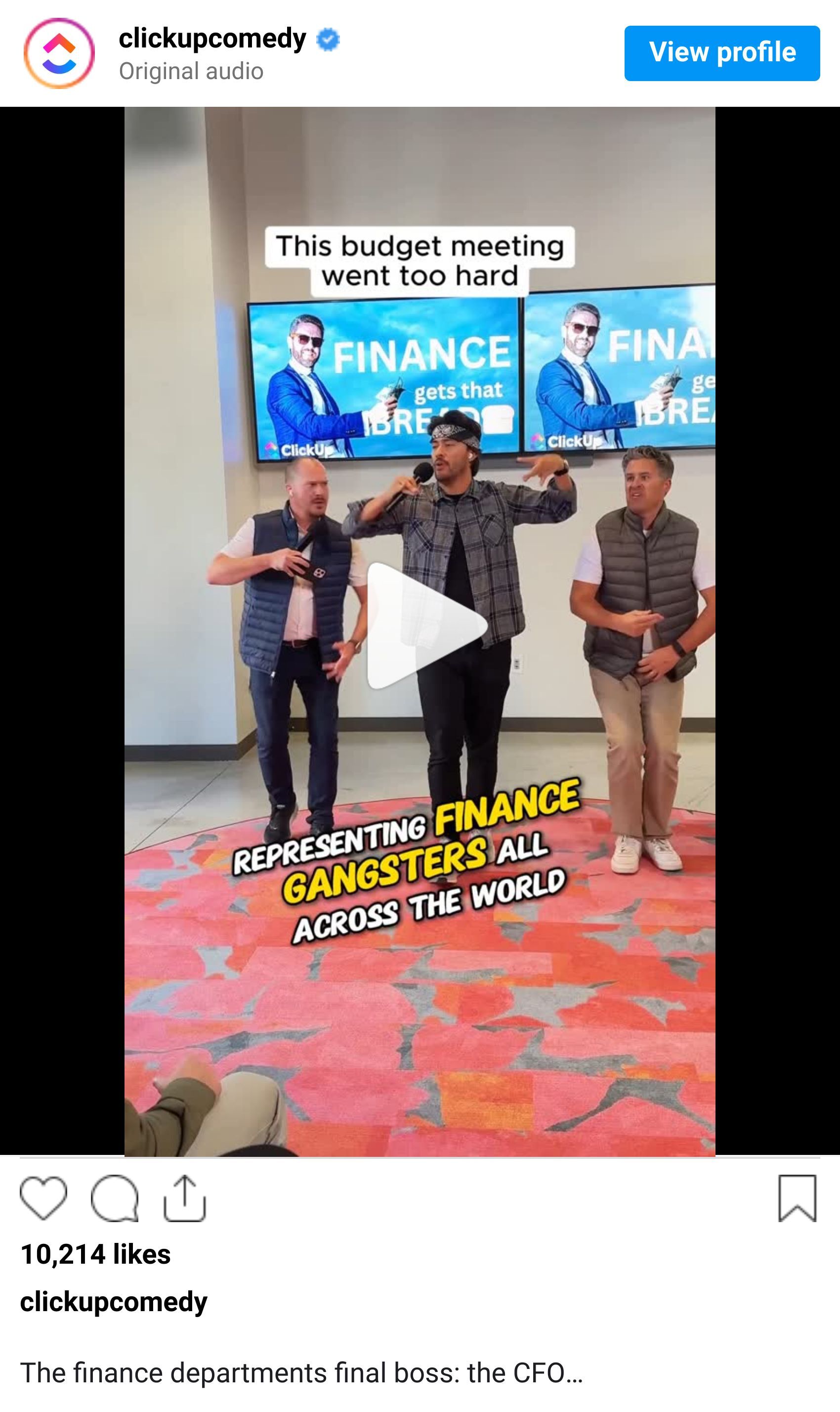
ICYMI, here are some of my favorite finance/business social media posts from this week. It’s like KISS says: I wanna rock ‘n roll all night and party every day.
Because those books won’t close themselves…

If you’re looking to sponsor CFO Secrets Newsletter, fill out this form, and we’ll be in touch.
Find amazing accounting talent in places like the Philippines and Latin America in partnership with OnlyExperts (20% off for CFO Secrets readers)
If you enjoyed today’s content, don’t forget to subscribe.
You can help make sure this newsletter always stays free simply by spreading the word. And when you share CFO Secrets with your finance friends, you’ll earn rewards, including a 50-page PDF guide on what it takes to be a great CFO. Start sharing your unique referral code today: {{rp_refer_url}}
Let me know what you thought of today’s Mailbag. Just hit reply… I read every message.
In Saturday’s Playbook, we reopened the door to an all time favorite; Maintainable Free Cashflow. Check out the newsletter here.


Disclaimer: I am not your accountant, tax advisor, lawyer, CFO, director, or friend. Well, maybe I’m your friend, but I am not any of those other things. Everything I publish represents my opinions only, not advice. Running the finances for a company is serious business, and you should take the proper advice you need.
