


“Real AI tool beyond imagination.” — G2 reviewer of Ledge
Ledge embeds AI agents directly into your close checklist, putting the close on autopilot, automating reconciliations, journal entries, working papers, and flux analysis.
Users call it “one of the most powerful AI-driven finance tools,” built with “incredible accuracy” that “handles complex reconciliation logic and exceptions that usually require human judgment.”
🎥 Watch how AI can run your close (not just organize it).

Answering your questions is one of the most fulfilling things I do. Hit me with your most challenging CFO issue, and you could be featured in an upcoming Mailbag.
👉 Send me your questions by filling out this form.
Now, on to today’s Mailbag.
We’ve got some great topics. Here’s what’s on tap:
Hedging interest rates
Direct & indirect cash flow forecasting
The chasm between strategy and fraud
Now, let’s get into it.

Just_a_fin_guy from Greece asked:
Hey Secret, thanks for the invaluable content and the knowledge sharing, much appreciated.
So, I am the CFO in a family business in Greece.
I recently thought that now that the Euribor is stabilized around 2%, it would be a good idea to “buy” an interest rate swap at that area. I don’t intend to make a profit (wish I had thought about it 3-4 years before). I just want to avoid future fluctuations after what we experienced in the previous years.
It is provided to me by a Greek bank at a very logical rate. But I could not persuade the CEO. He keeps thinking in gain/loss scenarios and probabilities. But my point is to secure the darn thing (in a very logical number) and move on.
How would you propose I could focus his mind on the benefit of having a steady interest rate, for at least half of our loan portfolio?

Thanks for the question, Just_a_fin_guy.
I think about interest rate hedges the same way I do about commodity prices: it’s about risk management.
Unless you’re a macro hedge fund that speculates on rates for a living, making a gain on interest rates is luck, not genius. I’ve seen plenty of CEOs and CFOs call one interest rate or oil price correctly and suddenly believe they’re the next George Soros. Maybe they are. But if so, they should quit and start a hedge fund.
I’ve also seen poor risk management wipe out good businesses. One contract mispriced against inflation, or one unhedged interest rate cycle, can destroy years of operating profit.
After a decade-plus of zero rates and macro calm, we’re back in a world where volatility is the base case. So your job as CFO is to protect the downside and create optionality, not to win a bet on the macro.
In your case, your instinct is right. You’re thinking about what happens if Euribor heads back to 4%. Another 200bps would hurt. But your CEO’s concern is also fair: what if Euribor drops back to zero? Fixing at 2% could leave you overpaying relative to competitors who stay floating. That would give them more capital to outgrow you. That’s a legitimate business risk, too.
Most CFOs think about risk linearly. I’ve learned most about risk from great entrepreneurs - they think about it multi-dimensionally. Cost, competitiveness, flexibility, and reputation all matter.
Your CEO sounds like a probabilistic thinker. That’s good. Play to that. Set up a few scenarios and show the trade-offs clearly.
For example, you could:
Hedge part of the exposure now, leaving the rest floating - as you’ve proposed
Stagger the duration of swaps (say 75% fix for 2 years, 25% for 5 years, etc). You could use this to meet your CEO where they are at - and build a hedging curve that matches their macro view - without betting the farm
Explore interest rate caps or collars - these give you downside protection if rates rise, while keeping upside if they fall (at a cost.)
Each of these options shows you’re managing risk, not gambling on the macro.
But before that, you and your CEO need alignment on one thing: What does “risk” actually mean for your business? Only once you both define that can you design the right solution.
Here’s how I’d frame it:
“I hear you. You don’t want to miss upside if rates fall. I want to protect us if they spike. We’re in the business of X, not interest rate speculation. Let’s agree on the risks we’re trying to manage, and I’ll get a few structures from the bank that protect the downside while giving some upside. Then we can lock it in and get back to running the business.”
TLDR: You’re both right. But you need to align on the definition of risk, hedge part of the exposure, and move on. The goal isn’t to be right on rates. It’s to stop rates being the thing that decides whether you’re right.


Martin from NY asked:
In the context of rolling cash flow forecasts, what drives your decision to choose between the direct vs. indirect methods?
Great question, Martin. This concept is spectacularly misunderstood.
Quick recap.
The direct method forecasts actual cash transactions as they hit the bank. Opening cash + receipts – payments = closing cash. It’s simple, tangible, and intuitive. Anyone can follow it.
The indirect method is derived from the P&L and balance sheet. It starts with a definition of profit. Many use net income (I prefer EBITDA or EBIT), adjust for non-cash items and working capital movements, and calculate implied cash flow. It requires proper accounting discipline to build and interpret.
So, when do you use which? It comes down to time horizon and purpose.
Direct method: short-term liquidity management
Typically used for 13-week rolling forecasts, because:
You can be precise in the short term - most receipts and payments already sit in AR/AP ledgers
It connects easily to operational data like overdue debtors or upcoming supplier runs
It’s reconcilable to the bank, allowing quick iteration
Weekly intervals would make an indirect forecast impossible to maintain without weekly P&L and balance sheet models. And who wants to do those?!
Indirect method: strategic planning
Best suited for medium- to long-range forecasting (12–18 months, or multi-year plans), because:
Beyond a few months, cash movements are driven by strategic assumptions and unit economics, not specific invoices
Forecasting direct receipts and payments far out becomes meaningless
It ties directly to financial statements, making it easier to anchor to targets and track performance
Here’s where most finance teams get it wrong
They treat both as FP&A exercises. Or both as treasury exercises. Because, well, both are “cash forecasts.”
That’s wrong. They serve completely different purposes.
A short-range (13-week) forecast is a treasury operations tool. It answers “Can we pay this supplier next week?” or “What happens if that customer slips?”
A longer-range forecast is an FP&A tool. It informs strategic decisions on growth, investment, and funding needs.
They should talk to each other, but they are built, owned, and used differently.
If you want to go deep on this topic, I geeked out on it here.
TLDR:
Use the direct method for short-term cash control. Use the indirect method for long-term planning. Never confuse a treasury tool with an FP&A tool. They solve different problems.

Rookie CFO from California, USA asked:
I am a rookie CFO working for a veteran CEO. There is pressure to be “strategic” and take advantage of most gray areas in accounting regulations to make ourselves look as good as possible. Where do you draw the line between taking advantage of gray areas to be “strategic” and committing fraud?
Hey Rookie CFO, thanks for the question.
I’ll level with you, your language is troubling me here. There is no gray area between being “strategic” and committing fraud. That’s a f*cking chasm. Don’t get lost, my friend.
Excuse me for being pedantic, but this matters. You need to reframe the question entirely. The real questions are:
Where does a CFO have legitimate judgment in accounting, and where do they not?
How do you set acceptable parameters for that judgment?
How do you bring your CEO with you, especially when they want the numbers to “look good”?
First, what reporting are we talking about? Tax filings? 10-Ks? Lender reports? Internal management accounts? Context matters. The level of judgment and risk tolerance is completely different if you’re talking about internal management reporting for a 100%-owned business vs. a filed 10-K or audited financials.
That said, a lot of accounting isn’t judgmental at all.
Booking invoices, recording transactions, recognizing expenses - these are factual. There’s no creativity there. Stick to your policies. Don’t screw around with these and start bending the rules because someone wants to “smooth earnings.”
Where the gray actually exists is in estimates and assumptions about the future:
Warranty reserves
Bad debt allowances
Inventory provisions
Revenue recognition on complex contracts
Etc
These are judgment calls - but even there, the range of acceptable answers isn’t infinite. You can set defined parameters. For example, you might peg warranty reserves at the prior 12 months’ claim rate ±10%, depending on whether claim trends are improving or deteriorating.
The key is to codify those rules (the real judgment) and get buy-in from your CEO upfront. Once you’ve agreed on the rules of the game, stick to them. That’s what keeps everyone honest.
That still leaves a little room for flex. If you want to round an assumption one way or the other to suit the moment, I’m not losing sleep over that. But if you’re consistently sitting at the aggressive (or conservative) end of the range, you’re systemically misleading people (including yourself). Be careful. I wrote more about this here, in the context of forecast assumptions, where there’s generally far more room for judgment than in reportage.
And be very clear: you are the decision maker on accounting judgments. You report to the CEO on everything else, but not on accounting. That’s your fiduciary territory. Your CEO doesn’t get a vote on GAAP. This is something I make a non-negotiable for every new CEO I work with.
Trying to “look good” through accounting manipulation is dumb. In one of my past CFO roles, I inherited a business that had fallen into that behavior. It wasted enormous energy. I shut it down immediately. Radical transparency - showing the real results, warts and all - is the only way to drive real improvement. You can’t polish a turd.
Now, there are rare exceptions. Around transactions - refinancing, fundraising, M&A - it’s sensible to frame the business in its best light. But even then, the story must be credible and defensible. There’s a difference between presentation and fabrication.
TLDR: Fraud and “strategic accounting” aren’t cousins. They’re opposites. Judgment exists only within clear, documented policy. Set those rules, own them, and protect the integrity of your reporting, even if it makes you unpopular.


A few of the biggest stories that every CFO is paying close attention to. This is the section you might not want to see your name in.
When you’re in the CFO hot seat at one of the most high profile companies in the world, you’d better be prepared for every word you say to be overanalyzed. OpenAI CFO Sarah Friar had a bit of a stumble around the word “backstop” that she and Sam Altman had to roll back.
This is why it pays off to develop your communication skills relentlessly.
Lester Jones, SVP of FP&A for the Hawks, is facing some serious charges. An internal audit revealed some evidence of sketchy behavior - allegedly using his corporate cards like a personal piggy bank to buy lavish trips. And you’ll never guess where Lester earned his audit chops back in the day … yes, Arthur Andersen.
This sounds depressing, but when you dig in, it’s fascinating. Seems like an interesting way for EY leadership to acknowledge the rapid change curve in front of the firm, while also engaging staff in the dialogue. Strikes me as a clever way to accelerate getting to a ‘shared language’ for AI in the Big 4 - from the outside at least.

ICYMI, here are some of my favorite finance/business social media posts from this week. In the words of Kendall Roy, “all bangers, all the time.”:
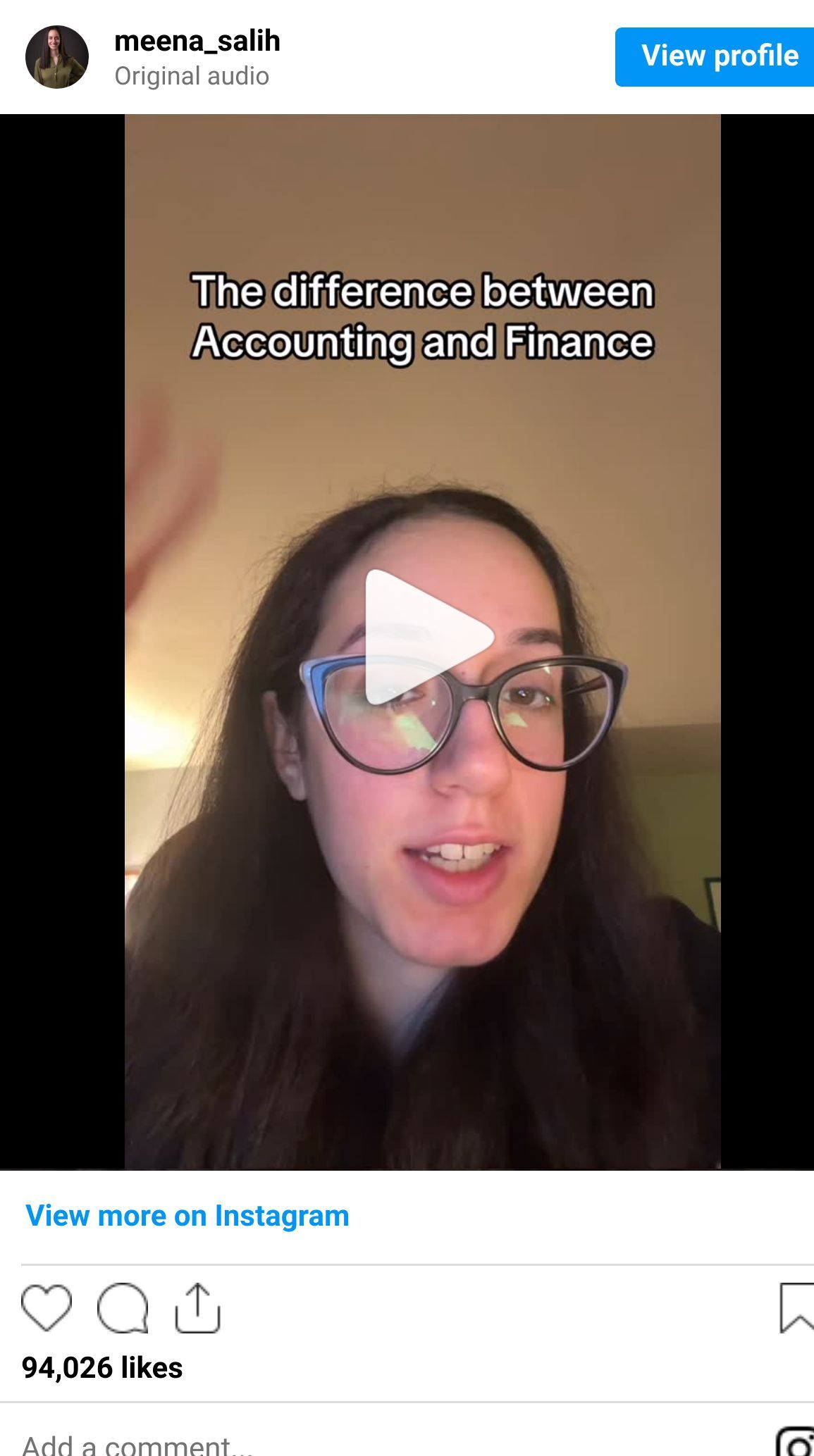
Power to the independent content creators. Media is changing fast (especially for CFOs 😎):

If you’re looking to sponsor CFO Secrets Newsletter, fill out this form, and we’ll be in touch.
Find amazing accounting talent in places like the Philippines and Latin America in partnership with OnlyExperts (20% off for CFO Secrets readers)
If you enjoyed today’s content, don’t forget to subscribe.
You can help make sure this newsletter always stays free simply by spreading the word. And when you share CFO Secrets with your finance friends, you’ll earn rewards, including a 50-page PDF guide on what it takes to be a great CFO. Start sharing your unique referral code today: {{rp_refer_url}}
Let me know what you thought of today’s Mailbag. Just hit reply… I read every message.
On Tuesday, we dived into the thawing M&A freeze and what it means for CFOs in the most recent Boardroom Brief. Check it out now.
Then on Saturday, I continued this month’s Playbook series on scaling the finance function. Specifically, how to lay the foundation for a strong future when shifting from a manual, founder-led finance function to a managed finance function. Check out the newsletter here.


Disclaimer: I am not your accountant, tax advisor, lawyer, CFO, director, or friend. Well, maybe I’m your friend, but I am not any of those other things. Everything I publish represents my opinions only, not advice. Running the finances for a company is serious business, and you should take the proper advice you need.
