


5-day, audit-ready close in 60 days. Guaranteed.
Maximor's AI agents plug into your existing ERP and automate an audit-ready close.
Our engineers and accountants handle the setup tailored to your accounting policies & processes
AI does the work with audit trail
Your team reviews and signs off
60-day guarantee: If we don't hit the success criteria, you get $10,000 from us.
Trusted by CFOs at Perplexity, Sierra, Dura, Kiva and more.

Just a quick note to say thank you for supporting me during the SimCFO launch last week. It’s been amazing to see feedback from so many people enjoying the investor calls, and negotiation modules.
And if you decided not to join, thank you for your patience during the launch. I know I sent quite a few emails on it over the last few days - normal service is resumed now!
We will be reopening for new cohorts shortly, so please drop your email address on the waiting list here if you want to be first in line.

Send me your stickiest CFO dilemmas (anonymously if you wish), and I’ll answer the best ones in the mailbag.
👉 Send me your questions by filling out this form.
Now, on to today’s Mailbag.
We’ve got some great topics, including a special ‘double’ length answer. Here’s what we’re diving into today:
Covering your a**
Relationship building
Now, let’s get into it.

FD Under Pressure from the UK asks:
I’m a UK Finance Director operating in a group experiencing acute cash-flow pressure. Liquidity is insufficient to meet all obligations as they fall due, meaning payment decisions have become legal and ethical rather than purely operational.
I’m conscious of my duties under the Companies Act 2006, Insolvency Act 1986, and my professional ethical obligations as a chartered accountant.
How would you approach payment prioritization, board engagement, and documentation in this situation?
At what point does a CFO move from “supporting the business through distress” to “protecting themselves from personal liability”?

My friend, I HAVE BEEN THERE.
When I saw this question come in, I moved it right to the top of the pile. As I know how lonely and urgent these situations are. Buckle up, because it’s a longer answer, as there is a lot to say, and it’s all important.
So first up, I’m going to be boring and reiterate my disclaimer… This is not legal advice. I am not a lawyer. What follows is guidance only based on my experience. You absolutely need proper advice from a UK restructuring and insolvency lawyer.
You kind of said the magic words: “liquidity is insufficient to meet all obligations as they fall due.” That phrase is uncomfortably close to the legal definition of cashflow insolvency. So you need to be careful how, when, and where you say those words out loud.
But… this is a safe space, and you were smart in making sure you submitted this question anonymously.
You already know this, but it’s worth restating plainly: once a company is insolvent, or insolvency is likely, the director’s duties shift from shareholders to creditors. That shift is based more on substance than legal form. It does not need a formal insolvency process to have started.
There is a real distinction between:
A short-term liquidity squeeze that can be managed with a bit of payment scheduling and good stakeholder management
A situation where creditors are likely to suffer loss, regardless of what you do
Deep down you’ll know which you are dealing with here. So your behavior needs to reflect that reality.
I’ve always set a high bar for walking away to protect myself. I haven’t done it yet. That’s not to say I wouldn’t if I truly had to. I’ve come close once or twice. But I’ve always taken the view that these moments matter. The future of the company, and a lot of people’s jobs, hang on them. And I was being paid to take the pressure and bend the business back into shape.
Board engagement
This is where personal liability is won or lost.
You must over-communicate with your fellow statutory directors, and you must do it in a way that is provable. No one should be able to say “I didn’t know.”
Practically:
Circulate a 13-week rolling cashflow forecast weekly, without fail
Send it by email with clear, factual commentary
Call out assumptions, risks, and inflection points explicitly
Avoid emotional language, speculation, or optimism bias
Yes, this is the forecast you are probably taking to bed with you every night. Good… share it.
Regular board meetings are essential. These are not performative. They are part of demonstrating due process. Keep proper minutes. They should show:
What information the board considered
What options were discussed
Why decisions were taken
How creditor interests were weighed
This minute trail will read like a diary if things go wrong. That is exactly what you want.
In most jurisdictions, directors are rarely punished for decisions that look bad in hindsight. They are punished for failing to follow process, failing to inform themselves, or failing to consider creditors once they should have.
Payment prioritization
You will be making decisions about who to pay and when multiple times every day. It can be easy to lose sight of the big picture. Once insolvency is probable, payment decisions stop being “commercial optimization” and start being about creditor fairness.
You must be extremely careful about:
Preferring one unsecured creditor over another without justification
Making payments that cannot be defended as preserving value for the creditor body as a whole
Paying connected parties, bonuses, or non-essential costs
Some prioritization is defensible. For example, payments that are necessary to keep the business trading for the benefit of creditors as a whole can be justified. But “we always pay supplier X first because they shout loudest” is not.
But there is also a fine line here. These situations can become a self-fulfilling doom loop, too. I once sat in a board meeting where half the board felt we met the insolvency test (and took a very different course), and the other half didn’t. I was in the half that didn’t. We had independent lawyers minuting our board meetings… the works. Frankly, it was scary. We managed to trade through it and recover, but it took steady hands and a lot of guts.
If you are unsure whether a payment could later be challenged as a preference or wrongful trading, that is exactly when you pause and get legal advice.
When does the CFO shift from “saving the business” to “protecting themselves”?
In reality, the trade off between your situation and the company is not as big as you might think. You can serve the Company and protect yourself at the same time.
You protect yourself by:
Insisting on proper forecasts and information
Escalating issues early
Documenting concerns and advice given
Ensuring the board confronts the real position, not a sanitized one
If you ever find yourself being asked to:
Suppress information
Delay board disclosure
Make payments you cannot rationally defend
Continue trading with no credible path to avoiding creditor loss
That is the line. At that point, your obligation is no longer to “be supportive” but to be professionally and legally correct. That may include formally recording dissent or, in extreme cases, stepping away.
Final thought
The key question the board must answer is whether the situation is recoverable and on what terms.
If the business is operationally sound but over-levered, you may be looking at a financial restructuring. If the business does not generate any CFADS (cashflow available for debt service) at all, you are into operational restructuring or worse.
Either way, this is where proper legal advice is worth every painful penny.
Most exceptional CFOs I know were forged in a moment like this. Whatever the outcome, if you act as a disciplined steward, follow due process, and put creditors properly into the frame, you will come out of this better, tougher, and intact. You might even have a few good stories to tell.
I know some outstanding UK restructuring lawyers if you want an introduction. They are ‘Big Law’ types so only really suitable for 9 figure+ sized issues, and they are not cheap. But neither is getting this wrong. Email me at [email protected] if this is suitable and you want an intro.
And to cheer you up (because you sound like you need it), here is Donny Hathaway’s wonderful cover of John Lennon’s Jealous Guy:
TLDR: Once insolvency is likely, your duty shifts to creditors; protect yourself by over-communicating, documenting everything, prioritizing fairness, and getting specialist legal advice early in the process is your shield.

Pamela from Mexico asked:
I've had one of the worst years in my career. Not because of a lack of technical skills, but because of how I have managed (or mismanaged) my communication with Senior Leadership.
It’s not about numbers. But rather, a situation in my company in which we have massive financial losses and no leadership. I was systematically and deliberately excluded from key information and meetings (and I'm the CFO). I felt the need to raise it to HQ, effectively bypassing the hierarchy.
Unfortunately, this was perceived as me being a "drama queen" and giving off the impression that I am immature. It was a big eye-opener on corporate politics, perception, and communication. I was just told that I am considered a good finance director but not a real CFO.
I don't know how to manage politics and how to be a strategic CFO. What are the key steps that you suggest when a CFO is in this situation, in terms of managing politics, concrete communication tips, and key changes to be seen as more senior?
Thank you!
Pamela. I’m sorry you’ve been through this. Situations like this are brutal, and they leave scars even when you’ve done nothing wrong.
I’m going to be careful here, because two things can be true at once.
First: “Drama queen” is a lazy label. I’ve worked with plenty of men who stirred constant chaos, and I never once heard them get branded “Drama Kings.” I’ve also seen the term used to shut down legitimate concerns. If you were systematically excluded from key meetings and information while being the CFO, you were right to be aggrieved. That is not normal, and it is not healthy governance.
Second: you did catch yourself offside politically. And that matters, even if the underlying issue is real.
There are two questions you need to reflect on honestly:
How did you end up excluded in the first place?
How did you handle the escalation once you were?
Only you will really know the answer to the first. Sometimes it’s deliberate sidelining. Sometimes it’s a breakdown in trust that happened earlier than you realized. Sometimes it’s a power play. Sometimes it’s death by a thousand small signals. But if you don’t understand how it happened, it’s hard to stop it from happening again.
I’ll focus on the second, because that’s where the biggest lesson is.
Managing BU versus Group politics is one of the hardest parts of a divisional CFO role. You are constantly walking a tightrope between loyalty to your local leadership and your duty to the wider group.
The way I always thought about it was this: you need two relationships to be strong at all times.
First, with your divisional president or local CEO. You need a relationship where you can be direct, candid, and calm. Not emotional. Not accusatory. But direct. If that relationship is broken, everything becomes harder.
Second, with the Group CFO or HQ leadership. This relationship must be built on trust and discretion. You need to be able to say, “Here’s what I’m seeing, help me think this through,” without it immediately becoming a political grenade thrown back into your business.
If you don’t have both, you are exposed.
At senior levels, relationships are not interchangeable. Each one has its own emotional bank account, and you are constantly drawing down or topping up that balance with tone, timing, and judgment. Once that account is overdrawn, people stop listening to what you are saying and start reacting to how you are saying it.
That’s maybe where things have gone wrong for you.
By escalating past the hierarchy, even with good intent, you created a narrative that you were maneuvering rather than managing. Fair or not… that perception does stick. And once someone decides you “don’t get politics,” everything you say after that is filtered through that lens.
At this level, you must never put yourself in a position where someone can credibly say you were working around them rather than with them. You need to be visibly “onside” at all times, even when you are deeply uncomfortable. You can still go talk to your group colleagues, just make sure you local team know you are doing it.
There are times to pull the ripcord and blow the whistle. But those should be reserved for clear ethical breaches, legal risks, or integrity failures. Once you escalate to that level, you should assume there is no way back.
You should also hear this clearly: if both your divisional leadership and group leadership failed to protect you or course-correct constructively, that says something about the environment, too. In a healthy organization, this would have been handled very differently.
Now, a hard truth.
If you’ve been labelled “immature” or a “drama queen,” you are likely at or near the name-calling stage of the relationship breakdown. That is extremely difficult to recover from. Not impossible, but hard. You may want to seriously consider whether your energy is better spent repairing a damaged reputation or starting fresh in an environment where you get the benefit of the doubt from day one.
You are clearly capable. You are clearly serious. And this experience, painful as it is, has accelerated your understanding of executive politics more than five “good” years ever would.
Life really is too short to work for assholes.
You might find this useful too. I wrote it after living through some of this myself.
Reach out by replying to this email if you want my help thinking through this a little more.
TLDR: You weren’t wrong to raise real issues, but at senior levels, how and where you escalate matters much more than the substance. Rebuild trust carefully or consider a clean reset in an environment that will back you.


A few of the biggest stories that every CFO is paying close attention to. This is the section you might not want to see your name in.
Former ADM CFO Vikram Luthar is hit with accounting fraud charges, for allegedly fudging profit numbers. The government dropped cases against two other execs, including a long-time former ADM CFO, after they settled related charges.
Must be something in the air. The CFO of shuttered online sneaker retailer Zadeh Kicks pleaded guilty to bank fraud and was sentenced to 18 months in jail.
We’ve all fantasized about telling our Company to f*ck off as we left the building. EY Partner Cameron Bird actually did it though…

ICYMI, here are some of my favorite finance/business social media posts from this week. Go on, fall into a rabbit hole, no one is really watching.
Because everyone deserves a break from preparing the board deck once in awhile…
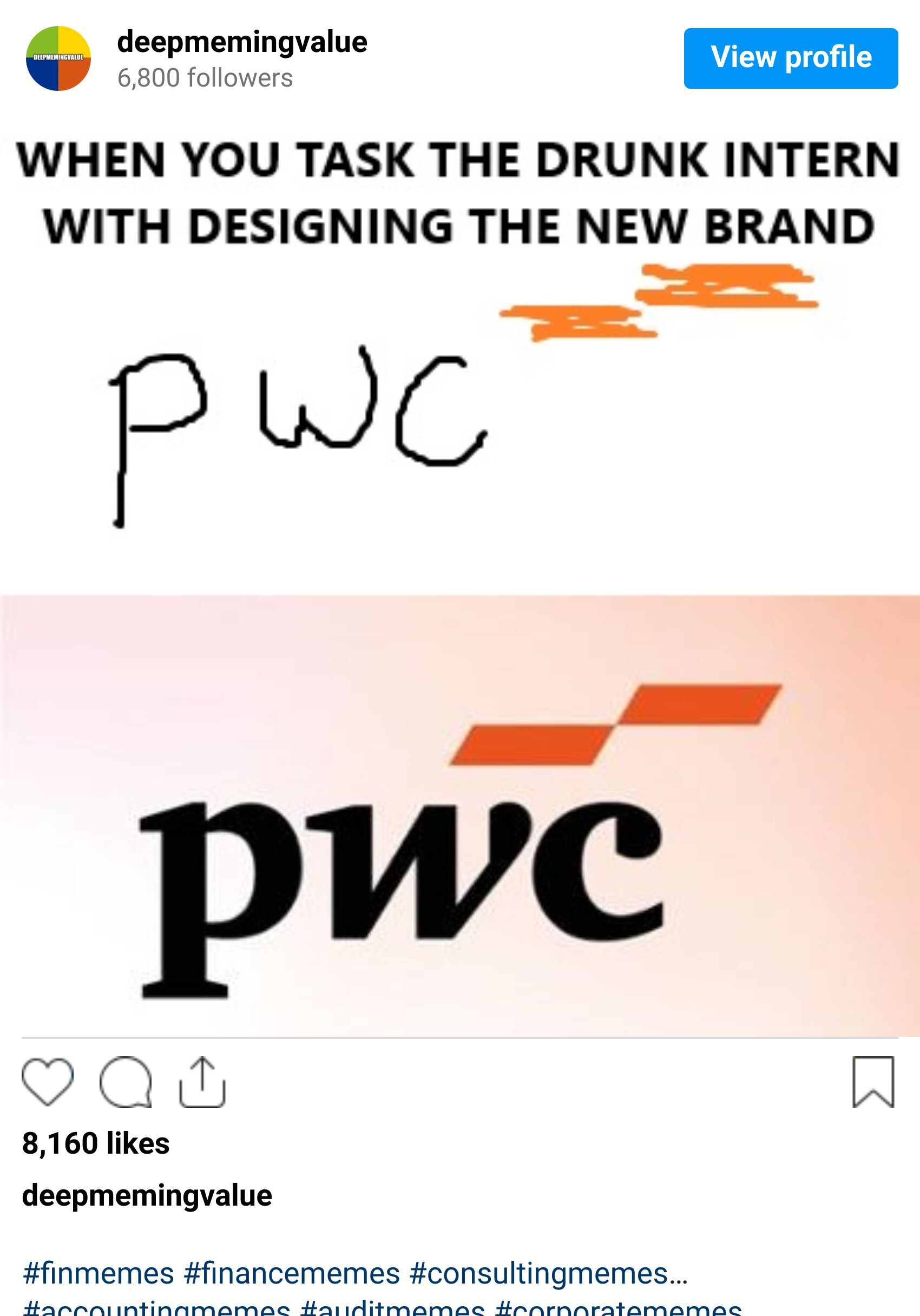
And first up … this week in ‘life imitating art’ Disney are about to pick the chair of their theme-park as the new CEO:

OK … so it’s bad, but it’s a lot better than the old one:

If you’re looking to sponsor CFO Secrets Newsletter, fill out this form, and we’ll be in touch.
If you enjoyed today’s content, don’t forget to subscribe.
You can help make sure this newsletter always stays free simply by spreading the word. And when you share CFO Secrets with your finance friends, you’ll earn rewards, including a 50-page PDF guide on what it takes to be a great CFO. Start sharing your unique referral code today: {{rp_refer_url}}
Let me know what you thought of today’s Mailbag. Just hit reply… I read every message.
ICYMI: We wrapped up a Playbooks series on Cashflow Mastery this week


Disclaimer: I am not your accountant, tax advisor, lawyer, CFO, director, or friend. Well, maybe I’m your friend, but I am not any of those other things. Everything I publish represents my opinions only, not advice. Running the finances for a company is serious business, and you should take the proper advice you need.
